
Silicon steel slitting lines play a critical role in preparing electrical steel for transformer cores, motor laminations, and other electrical components. However, achieving accurate strip widths is only one part of the process. Manufacturers must also maintain stable strip movement, protect surface quality, and produce slit coils with consistent winding characteristics. Tension control is central to these objectives because fluctuations in strip tension can affect material tracking, cutting stability, and recoiling performance.
For thin electrical steel, these challenges become more demanding as line speed increases and a master coil is divided into multiple narrow strips. SUMIKURA's E-Steel Slitting Lines are designed for CRGO and CRNGO electrical steel, with a published thickness range of 0.1–0.5 mm and a belt bridle tension control configuration. Understanding how tension control works can help manufacturers evaluate slitting line performance and select equipment that matches their material and production requirements.
Tension control is the process of maintaining appropriate tensile force in a moving metal strip as it passes through different stages of a slitting line. The uncoiler supplies the strip, the slitter cuts it into narrower widths, and the recoiler winds the finished strips into coils. Tension must be coordinated across these sections to keep the material moving smoothly without excessive slack or pulling force.
If tension is too low, the strip may become unstable, making accurate tracking and consistent winding more difficult. If tension is too high, the material may experience excessive stress, while the strip edges, surface coating, and finished coil geometry may be affected by other interacting process conditions. Effective control therefore requires a suitable operating range rather than simply maximizing tension.
In practical production, tension control works alongside strip guiding, slitting tooling, separator positioning, and recoiler operation. These systems must respond to changes in coil diameter, strip width, line speed, and the number of slit strands. A stable process helps reduce unnecessary adjustments and supports repeatable production across different electrical steel specifications.
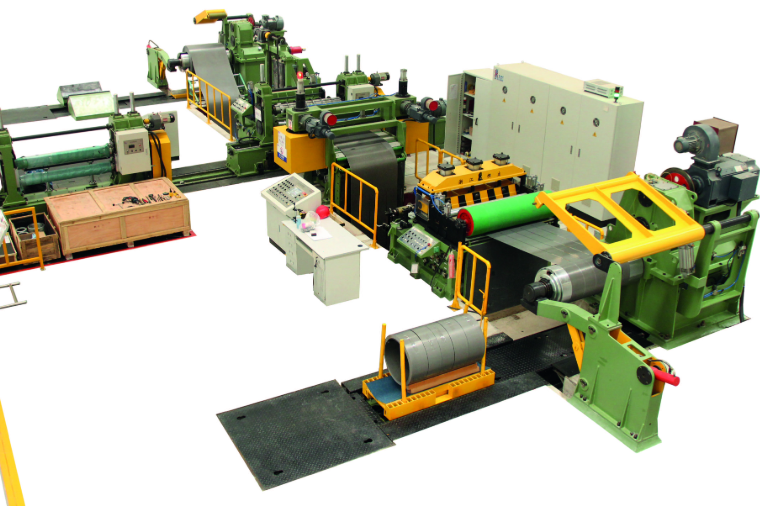
Strip misalignment is one possible consequence of unstable strip handling. Uneven tension across the strip width, incorrect guiding, or poor alignment between line components can contribute to wandering and inconsistent tracking. These problems may make it harder to maintain the intended slit widths and can increase the need for operator intervention.
Uneven recoiling can occur when the individual slit strips are not wound under suitable and consistent conditions. Differences in tension, separator setup, or strip geometry may lead to loose coils, uneven coil faces, or telescoping. Such defects can complicate coil handling, storage, and subsequent processing. Recoiling quality therefore depends on more than the tension setting alone.
Surface damage is another concern when processing coated electrical steel. Excessive contact pressure, unsuitable friction materials, contaminated rollers, or strip-to-strip rubbing may cause scratches, marks, or coating damage. A tension system that minimizes unnecessary sliding contact can help protect sensitive surfaces, although surface cleanliness and equipment maintenance remain essential.
Production instability often develops when these issues occur together. Operators may need to stop the line, correct strip tracking, adjust winding conditions, or inspect defective coils. Properly coordinated tension control, slitting tooling, and guiding systems can help reduce avoidable interruptions and improve production consistency.
Electrical steel is used in applications where magnetic performance and dimensional consistency are important, including transformer cores, electric motors, and generators. CRGO, or grain-oriented electrical steel, is commonly associated with transformer core applications, while CRNGO, or non-oriented electrical steel, is widely used in rotating electrical machinery. Both require careful processing to meet the requirements of their intended applications.
Thin electrical steel presents a particular challenge because small variations in strip tracking, cutting conditions, or winding behavior can become more difficult to manage as production speed increases. When a master coil is divided into many narrow strips, each strand must be guided and recoiled consistently. Unstable handling can contribute to width variation, edge irregularities, coil deformation, and surface defects.
Edge quality is especially important because burrs and other cutting defects can interfere with stacking and insulation between laminations. Surface coating integrity also matters because the coating helps provide electrical insulation between adjacent laminations. Tension control cannot independently guarantee magnetic performance, but it contributes to a production process that protects material quality and supports consistent downstream processing.
For this reason, manufacturers should evaluate tension control together with knife clearance, blade condition, separator arrangement, strip guiding, and recoiler design. A well-matched system is more effective than treating tension as an isolated machine setting.
Different silicon steel slitting lines use different methods to establish and regulate strip tension. The appropriate solution depends on material thickness, surface sensitivity, production speed, strip configuration, and required coil quality.
Felt plate systems generate resistance through friction between the strip and contact surfaces. They can provide a straightforward means of controlling tension, but the contact pressure and friction conditions must be carefully managed. For coated electrical steel, manufacturers should consider whether the contact method is appropriate for the surface finish and whether contamination or wear could affect product quality.
Belt bridle systems use driven belts to grip and transport the strip, creating a controlled tension difference between the entry and exit sides of the unit. By distributing the contact over a belt surface, the system can provide controlled traction without relying on conventional felt-pad contact. The belt material, contact pressure, drive coordination, and maintenance condition remain important factors in protecting the strip.
Driven roll systems use powered rollers to influence strip movement and tension. Their effectiveness depends on roll geometry, surface condition, drive control, and the available traction between the rollers and material. Roller-based systems can be appropriate for various metal processing applications, provided their contact conditions suit the material being processed.
When comparing these options, manufacturers should assess more than the nominal line speed. They should consider the minimum strip thickness, coating sensitivity, required tension stability, number of slit strands, and finished coil specifications. For electrical steel, surface protection and consistent handling should be treated as key equipment selection criteria.
A belt bridle is generally installed along the strip path where controlled traction is required to establish or maintain tension. Driven belts grip the strip over a defined contact area, allowing the unit to regulate the tension relationship between upstream and downstream sections. Its performance depends on coordinated drive control, sufficient traction, and suitable contact pressure.
For silicon steel, one important advantage is the ability to control tension without relying on conventional felt-pad contact. This can reduce certain surface-marking risks associated with friction-based contact systems, particularly when processing thin, coated electrical steel. However, a belt bridle does not eliminate every possible source of surface damage. Belt cleanliness, wear, pressure settings, and strip alignment must still be managed carefully.
The belt bridle must also work in coordination with the slitter head and recoiler. Before cutting, stable strip tension supports predictable feeding and tracking through the knives. After cutting, appropriate back tension helps the narrow strands enter the recoiling section under controlled conditions. If the tension settings, separator arrangement, and winding parameters are not coordinated, the finished coils may still exhibit uneven winding or other defects.
SUMIKURA lists a belt bridle tension unit for its E-Steel Slitting Lines, alongside specifications for processing CRGO and CRNGO electrical steel. This configuration is relevant to manufacturers looking for a combination of controlled strip handling and surface-conscious processing.
Material thickness and grade should be the starting point. Thin electrical steel may be more sensitive to handling variations, while different grades and mechanical properties can influence the suitable operating window. Manufacturers should establish settings based on material specifications and validated production trials rather than applying a single tension value to every coil.
Slitting speed also affects process stability. As speed increases, the control system must maintain suitable tension while responding to changes in strip movement and drive conditions. A setting that works at a lower speed may not deliver the same results during high-speed production. Tension stability should therefore be evaluated across the intended operating range.
Strip width and the number of slit strands influence how the material behaves after cutting. Narrow strips can be more sensitive to tracking and winding variations, while multi-strip production requires consistent separation and alignment. Knife setup, separator positioning, and the tension behavior of individual strands should be checked together.
Recoiling requirements determine the winding conditions needed for the finished product. Coil tightness, edge alignment, telescoping resistance, and handling requirements should guide the selection of suitable tension and winding parameters. Excessive tension is not a reliable shortcut to better coil quality.
Surface protection and equipment condition must remain part of the setup procedure. Operators should inspect belts or rollers for contamination and wear, verify strip alignment, and monitor the condition of the slitting knives. When defects appear, the cause should be investigated systematically rather than corrected by increasing tension alone.
A repeatable setup process should document material grade, thickness, strip layout, line speed, tension settings, tooling configuration, and observed coil quality. This provides a practical basis for troubleshooting and helps manufacturers reproduce successful production conditions.
SUMIKURA's published E-Steel Slitting Lines specifications identify CRGO and CRNGO as the target materials, with strip-processing widths of 400–1,250 mm, coil weights up to 15 tons, a thickness range of 0.1–0.5 mm, and a maximum of 40 slit strips. The listed line speed is 0–300 m/min, and the tension control configuration uses a belt bridle. These parameters provide a useful starting point for manufacturers assessing equipment suitability for thin electrical steel production. Actual performance depends on the material, tooling arrangement, process settings, and line configuration.
The belt bridle supports controlled strip handling, while precision slitting equipment and recoiling components work together to maintain the required strip geometry and winding quality. Manufacturers should evaluate these elements as a complete processing system because tension control alone cannot compensate for incorrect knife clearances, misaligned guides, or unsuitable separator settings.
Automation is another consideration when production involves frequent changes in strip widths or tooling arrangements. SUMIKURA describes an automatic slitter exchange system designed to support tooling changes, including separator arbor and slitter head changes. Automated tooling exchange can reduce manual handling and help shorten changeover operations, depending on the job and setup requirements. It also supports a more repeatable production workflow when combined with suitable setup procedures and inspection practices.
For manufacturers comparing silicon steel slitting lines, the key question is not simply whether a machine can reach a specified speed. It is whether its tension control, cutting precision, surface protection, recoiling performance, and automation features are appropriate for the planned material range and production volume.

Kesim hattı uzmanlarınız!
 Japonya'da Fabrika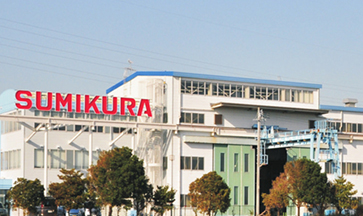
ADRES
487-3, Sanshincho, Chuoku, Hamamatsu, Shizuoka, Japonya
 Japonya yerel pazarı:+81 53-425-5331
Çin'de Fabrika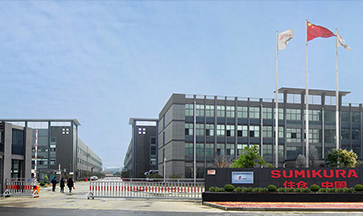
ADRES
265 Yixian Road, Deqing, Zhejiang, Çin
Yurtdışı pazarı:+86 572-883-2016



