
For any steel service center or electrical steel processor running a high-speed slitting line, the tooling changeover is one of the most painful productivity bottlenecks that rarely gets talked about in boardrooms — yet shows up clearly on every OEE report. When operators manually execute a tooling change on a conventional slitting line, the average downtime per changeover can range from 45 minutes to well over 90 minutes depending on the number of strips, the knife configuration, and whether separator arbors need to be repositioned. By contrast, a well-engineered automated slitter exchange system can compress that same operation to under 15 minutes — a reduction that directly translates to recoverable production hours every single shift.
Beyond the pure time loss, manual changeovers in high-tonnage tooling environments carry a serious safety dimension. Slitting knives for processing materials such as CRGO/CRNGO silicon steel and heavy HRS or HSS grades are under enormous mechanical stress during operation, and the knife assemblies themselves can weigh hundreds of kilograms. Having operators physically handle arbors, lift knife stacks, and realign separators without automated assistance creates exposure to crush injuries, lacerations, and musculoskeletal strain. These risks are not hypothetical — in facilities where width changes happen two to four times per shift due to high-mix order books, the cumulative risk exposure is substantial.
From a productivity perspective, the math is straightforward but the impact is often underestimated. If a facility runs two changeovers per shift and loses 60 minutes of production time each, that is two hours of dead time per shift — or roughly 25% of a standard eight-hour window gone before a single meter of strip is produced. Multiply that across three shifts and six working days, and the invisible cost of manual tooling changes compounds into a significant drag on output capacity, customer lead times, and ultimately margin. This is precisely why investment in automatic tooling change slitting solutions has accelerated rapidly among transformer core producers, EV motor lamination processors, and high-volume steel service centers.
The engineering logic behind a modern robotic slitter head exchange system is elegant in its sequencing. Rather than stopping the line, pulling the active slitter head out manually, disassembling the knife stack on-floor, and rebuilding it from scratch, an automated system decouples the changeover from the production cycle entirely. A standby slitter head — pre-loaded with the correct knife and separator configuration for the next order — is positioned off-line while the active head continues running. When the changeover trigger is received from the production scheduler, the sequence begins with controlled deceleration of the line and automatic extraction of the current arbor assembly using servo-driven mechanical arms rather than crane or forklift intervention.
Once the used slitter head is extracted, the robotic system moves it to the off-line preparation station where automatic knife cleaning is performed. Residual metal dust, silicon steel particles, and lubricant film are cleared from each knife face and separator ring using controlled brushing or air-blast mechanisms, maintaining the cutting edge geometry that is critical for burr-free strip edges — particularly important when processing thin electrical steel in the 0.1 mm to 0.5 mm thickness range. During this cleaning cycle, a built-in edge inspection function scans the knife geometry and checks for chip damage or excessive wear, automatically flagging tools that need replacement before they can degrade strip edge quality or damage the material surface.
The new cassette — already configured to the precise knife gap and separator width for the incoming order — is then loaded onto the slitter stand by the robotic arm and locked with high-pressure hydraulic clamping to eliminate any positional drift during operation. The entire sequence, from line deceleration to restart-ready confirmation, can be completed in under 12 to 15 minutes on well-configured systems. Integration with upper-level IT or MES production scheduling systems is what truly unlocks the efficiency multiplier: the next order's tooling configuration is pre-staged automatically based on the production schedule, meaning operators are not manually interpreting work orders or configuring knife stacks between jobs. The system reads the incoming width and strip count from the MES, stages the correct cassette, and initiates the exchange sequence autonomously when the line signals changeover readiness.
This level of automation is directly applicable to the automation high-speed slitting line configurations SUMIKURA designs and builds, where integration between the mechanical line components and the digital production control layer is engineered from the ground up rather than retrofitted as an afterthought.
One of the most practically important decisions when specifying a slitter exchange system is choosing between a turnstile configuration and a double slitter layout, and the wrong choice for your production profile can undermine much of the efficiency gain you are trying to achieve.
The turnstile approach — including both 2-arm and 4-arm variants — positions multiple pre-configured slitter heads on a rotating carousel. When a changeover is needed, the carousel rotates to bring the next head into the active position while the used head swings to the preparation station. This configuration is particularly well suited to high-mix, lower-volume operations where order widths change frequently and the penalty for each changeover is high. The 4-arm turnstile variant, as offered on SUMIKURA's slitter exchange system configurations, uses a pushing-plate ejection mechanism driven by a pneumatic cylinder sliding on linear guides to precisely index the knife stack, minimising position error and ensuring consistent setup repeatability without operator adjustment. For steel service centers processing transformer lamination grades or EV motor materials in short batch quantities, the turnstile approach can handle the width variety without compromising throughput.
The double slitter configuration takes a different approach: two complete slitter stands are installed in the line, one active and one on standby. While the first stand processes the current coil, the standby head is being dressed with the next order's tooling off-line. When the coil ends or the scheduled changeover point is reached, the line switches to the standby head — which is already locked and verified — with minimal interruption. This approach is particularly advantageous for high-volume, narrower-mix operations such as grain-oriented electrical steel (CRGO) service centers supplying transformer core manufacturers with long runs of consistent slit widths. The key benefit is that the changeover itself becomes nearly invisible from a production time perspective, as the preparation always runs in parallel with active production.
Choosing between these two approaches involves evaluating three primary variables: the material type being processed, the changeover frequency driven by the order book, and the available floor space in the production facility. For thin silicon steel processing (0.1 mm to 0.5 mm CRGO/CRNGO) with frequent width variations, the turnstile is usually the more space-efficient and flexible solution. For thick material processing (up to 9.0 mm HSS/HRS) with longer production runs, the double slitter's ability to handle heavier knife assemblies with a fixed stand provides superior stability. For facilities with constrained floor space, the turnstile's compact footprint is often the deciding factor. SUMIKURA's engineering team evaluates all three dimensions together during the line design stage, ensuring the exchange system selected aligns with the actual production demands rather than a generic template. For related upstream and downstream equipment considerations, the belt bridle and edge cropper configurations also interact with the chosen exchange system architecture and must be specified coherently.
The performance improvements delivered by automated coil processing downtime reduction through robotic slitter exchange are well documented in real-world deployments. SUMIKURA's automatic slitter exchange systems have been commissioned in multiple high-profile facilities, including a steel service center in Shanghai supplying TESLA with precision-slit electrical steel, where the off-line automatic unloading and loading of knife assemblies allowed the facility to increase its effective production hours per shift without adding headcount. A further deployment at Shougang in China demonstrated that fixing the active slitter stand in-line while simultaneously running off-line cassette preparation eliminated the sequential nature of changeovers that had previously serialized every width transition.
In quantitative terms, facilities transitioning from fully manual tooling changes to automated exchange systems consistently report changeover time reductions in the range of 55% to 65%. For a line previously requiring 75 minutes per changeover, an automated system typically delivers the same transition in 12 to 20 minutes, depending on knife count, material gauge, and system configuration. When expressed as OEE improvement, this time recovery directly increases availability — one of the three OEE pillars — by measurable percentages that can reach double digits across a full operational year. Transformer core manufacturers and EV motor lamination processors are among the strongest beneficiaries because their order profiles inherently involve high strip-count configurations and frequent width variations driven by lamination design diversity.
The safety dimension of automation is equally compelling. With zero manual strip handling required — a design principle consistently embedded in SUMIKURA's high-speed slitting line engineering philosophy — the risk of operator injury during tooling changes is substantially eliminated. Robotic arms handle arbor extraction, cassette loading, and knife cleaning without any human entry into the nip zone or tooling envelope. This directly reduces lost-time incident rates associated with tooling operations, which in heavy electrical steel processing environments can otherwise be a persistent safety management challenge. When combined with automated scrap management systems that handle strip trim and defective sections without manual intervention, the overall reduction in unplanned physical interaction with the line during production and changeover cycles is dramatic.
A common question from facilities considering a slitting line automation upgrade is whether the investment requires a complete new line or whether an existing slitting line can be upgraded with an automated exchange module. The practical answer is that both paths are viable, with different cost-benefit profiles depending on the age and mechanical condition of the existing equipment.
For slitting lines that are mechanically sound but were built without automated exchange capability, retrofit modules can be engineered to add a robotic exchange system to an existing slitter stand. This typically involves installing the off-line knife preparation station alongside the existing line, integrating the robot arm mechanics with the existing slitter frame geometry, and connecting the control system to the facility's existing MES or production scheduling software. The mechanical integration complexity varies depending on the original line design — lines with standardized slitter head dimensions and well-documented mechanical interfaces are significantly easier to retrofit than older equipment with non-standard or heavily modified tooling systems. SUMIKURA's service team carries out mechanical assessment and interface engineering as part of the retrofit scoping process, ensuring that the automation module is designed to the actual dimensional and load constraints of the host line rather than a generic specification.
For facilities planning new capacity or replacing end-of-life lines, specifying the automatic tooling change slitting system as part of a turnkey line package offers the cleanest integration path. On a new line, the slitter exchange system, cassette exchange system, back-tension control, threading solution, and packaging station can all be engineered as a coherent automation architecture from the outset. This eliminates the interface compromises inherent in retrofitting and allows the control system — including the MES integration layer — to be built as a unified platform rather than a patchwork of legacy and new controllers. SUMIKURA's turnkey slitting lines are available in both standard and E-Steel configurations, with the latter specifically engineered for CRGO/CRNGO processing at thicknesses from 0.1 mm to 0.5 mm and widths from 400 mm to 1,250 mm — parameters that align precisely with the needs of transformer and EV motor producers.
Regardless of whether the slitter exchange system is a retrofit or a new installation, the long-term performance of automated tooling systems depends critically on spare parts availability and after-sales technical support. Robotic exchange systems involve precision mechanical components — servo motors, linear guides, hydraulic clamping units, and sensor arrays — that require scheduled maintenance and periodic replacement. SUMIKURA maintains manufacturing facilities in both Japan (Hamamatsu, Shizuoka) and China (Deqing, Zhejiang), which supports spare parts supply chain resilience for customers across Europe, Asia, and the Americas. For customers requiring deeper technical integration, the company's service offering covers commissioning, operator training, and ongoing maintenance support to ensure that the efficiency gains delivered at line startup are sustained through the operational life of the equipment. Customers interested in exploring equipment solutions or discussing specific line requirements are encouraged to contact the SUMIKURA team directly for a technical consultation aligned to their production profile.

Kesim hattı uzmanlarınız!
 Japonya'da Fabrika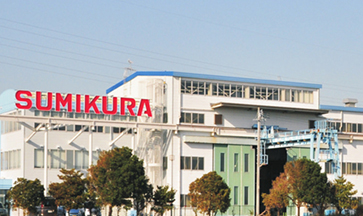
ADRES
487-3, Sanshincho, Chuoku, Hamamatsu, Shizuoka, Japonya
 Japonya yerel pazarı:+81 53-425-5331
Çin'de Fabrika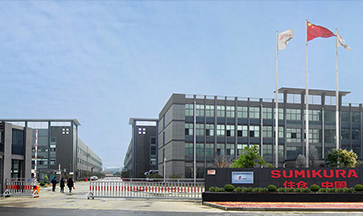
ADRES
265 Yixian Road, Deqing, Zhejiang, Çin
Yurtdışı pazarı:+86 572-883-2016



