The global sheet metal processing industry is undergoing its most significant structural shift in decades. Driven by the surge in electric vehicle production, accelerating near-shoring of manufacturing capacity, and the widespread adoption of ultra-high-strength steels, demand for automatic CTL line equipment is growing faster than at any point in the past generation. For procurement engineers, plant managers, and equipment buyers, understanding what the next generation of automated cut-to-length lines can actually deliver — technically, operationally, and commercially — has become a critical competency.
This article examines the forces reshaping the CTL line market, the engineering advances that define full automation, the role of Industry 4.0 connectivity, and the specific challenges that UHSS materials now place on leveling and cutting systems.
Several converging forces are simultaneously expanding the global market for automated cut-to-length lines and raising the technical bar for what those lines must be capable of delivering.
The most powerful driver is the global transition to electric vehicle manufacturing. EV body structures rely heavily on advanced high-strength steel (AHSS) and ultra-high-strength steel (UHSS) — grades that deliver weight reduction and crash performance simultaneously. These materials are significantly more difficult to level, cut, and stack than conventional cold-rolled or hot-rolled steel. As EV production volumes ramp at facilities operated by manufacturers ranging from established OEMs like Toyota, Honda, and SAIC to newer entrants like Tesla, every upstream coil processing step must be re-engineered to handle materials that simply did not exist in volume production a decade ago. CTL lines sit directly in that critical upstream position, and outdated equipment cannot keep pace.
Near-shoring is the second major demand catalyst. Across North America, Europe, and Southeast Asia, steel service centers and automotive Tier-1 suppliers are investing in domestic coil processing capacity to reduce supply chain exposure and meet local content requirements. This investment wave is generating substantial capital equipment orders for new coil processing lines, with CTL lines representing the largest single category by installed base and replacement value. SUMIKURA, headquartered in Hamamatsu, Japan with a production facility in Deqing, China and sales offices across Mexico, Brazil, Germany, Türkiye, and Thailand, has directly expanded its global footprint in response to this geographic diversification of demand.
Looking at the broader market outlook through 2030, the combination of EV-driven AHSS demand, near-shoring capital investment, and the ongoing replacement of aging coil processing equipment installed in the 1990s and early 2000s creates a sustained growth environment. Lines that cannot handle high-strength materials, integrate with plant IT systems, or achieve rapid changeover between product specifications will become commercially uncompetitive regardless of their initial capital cost.
The benchmark for a modern automatic CTL line has moved decisively beyond simple motorized uncoiling and powered shear operation. True full automation means the line transitions from one production order to the next — different material grade, different thickness, different sheet length — without any operator adjusting a mechanical component, entering a parameter manually, or intervening in the material flow.
That standard begins at the coil car. Automated coil transport systems position incoming coils on the reel without manual handling, aligning the coil center with the line centerline and initiating threading automatically. Threading systems detect the coil leading edge, feed it through the straightener entry guide, and advance it to the leveler without operator assistance. This matters not just for labor efficiency but for consistency: manual threading introduces variability in how the material enters the leveling section, which affects flatness quality in the first meters of every coil.
The most consequential automation advance in CTL line design is IT-driven automatic setup. In a fully integrated line, the production management system — whether an MES, ERP, or dedicated line control platform — pushes the order parameters for the next coil directly to the line controller. Leveler gap, roll force, shear stroke length, cut count, and stacker configuration are all pre-loaded before the previous coil finishes running. The operator's role shifts from parameter entry and mechanical adjustment to exception handling and quality monitoring.
At the tooling level, automatic knife and roll exchange systems complete this automation picture. Manual shear blade changes on a conventional CTL line require the line to stop, operators to access the shear housing, and blades to be removed, repositioned, and retorqued — a process that can consume 30 minutes or more per changeover. Automated knife exchange systems perform this operation in a fraction of the time, with consistent torque and alignment that manual procedures cannot reliably replicate. The leveler cassette exchange system takes the same principle to the leveling section: working rolls and intermediate rolls are pre-assembled in a removable cassette, and the entire cassette is exchanged — either manually guided or fully automatically — in under five minutes. For hybrid lines processing both steel and aluminum, up to three different cassettes can be configured for automatic selection based on the incoming material specification.
At the output end of the line, multi-station stacking systems — using vacuum stackers for surface-sensitive aluminum and non-ferrous materials, and magnetic stackers for ferrous sheet — allow finished stacks to be evacuated from one station while the next station begins receiving sheets. Production does not stop when a stack is complete. Offline packaging — automatic weighing, strapping, and wrapping in paper or plastic — further decouples the packaging cycle from the line's running speed, eliminating another traditional bottleneck.
The phrase "Industry 4.0" is frequently applied loosely to any equipment with a digital interface. In the context of CTL line Industry 4.0 integration, the meaningful distinctions lie in three specific capabilities: bidirectional data connectivity with plant systems, condition-based maintenance enabled by real-time sensor data, and the use of digital models to accelerate commissioning and optimize ongoing operation.
MES and ERP connectivity transforms the CTL line from an isolated production asset into a node in the plant's information network. Every coil processed generates a data record: entry weight, exit sheet count, yield calculation, cutting length accuracy log, and any deviation events. This data flows upstream to quality management and downstream to inventory and shipping systems without manual transcription. For customers of steel service centers — including the automotive OEMs that represent SUMIKURA's primary end-user base — traceability data from the CTL line is increasingly a contractual requirement, not an optional quality enhancement.
Predictive maintenance is where Industry 4.0 connectivity delivers its most direct financial return. On a conventional CTL line, maintenance intervals are scheduled on calendar or cycle-count triggers regardless of actual component condition. Sensors monitoring drive motor current draw, bearing vibration signatures, hydraulic system pressure, and shear blade wear patterns can identify developing faults before they cause unplanned downtime. A bearing that is beginning to fail generates a characteristic vibration frequency weeks before it reaches the failure threshold — enough lead time to plan a scheduled replacement during a weekend shift rather than respond to an emergency breakdown mid-production week.
Digital twin applications are advancing from aerospace and automotive assembly into heavy capital equipment including coil processing lines. A digital twin of a CTL line — a software model that replicates the physical line's mechanical and control behavior — allows commissioning engineers to validate parameter settings, test control sequences, and identify mechanical interference risks before the physical line is energized. For complex installations that integrate multiple sub-systems (blanking press, oscillated shear, stacking, and packaging), digital commissioning can compress the on-site startup period significantly and reduce the risk of equipment damage during initial trials.
High-strength steel coil processing is the area where the gap between technically capable CTL lines and commodity equipment is most clearly visible — and most consequential for the end product quality.
The fundamental challenge with UHSS above 1,000 MPa — and particularly with grades approaching and exceeding 1,500 MPa used in structural automotive components — is springback. When a high-strength material is bent around a leveling roll, the elastic portion of its deformation recovers when the bending force is removed. The higher the yield strength, the larger the elastic recovery. Standard leveler designs that are calibrated for conventional steel will under-correct for UHSS springback, producing sheets that appear flat during processing but exhibit measurable bow and twist once they are stacked and cooled.
The Six-Hi Leveler configuration addresses this directly. By adding back-up rolls to both the upper and lower work roll sets, the Six-Hi design prevents roll deflection across the material width — a deflection that would otherwise produce a variation in leveling force between the center and edges of the strip. The result is consistent plastic deformation across the full sheet width, which is the prerequisite for reliable springback correction in high-strength grades. For the most demanding UHSS applications, SUMIKURA's no-torque-loss spanning machines use multiple motors with electronic torque balancing across the roll width, maintaining uniform leveling force even when material hardness varies across the strip.
Shear blade engineering is the second major engineering challenge in UHSS processing. The cutting forces required to shear material at 1,500 MPa are substantially higher than those for conventional steel at the same thickness, and blade wear rates increase correspondingly. Edge quality — specifically burr height and the presence of microcracks in the cut edge — directly affects the fatigue performance of parts made from UHSS, which is a critical structural consideration in automotive crash components. Flying shears and the patented tilting eccentric rotary shears used in SUMIKURA's cut-to-length lines are engineered for the force levels and blade clearance tolerances that UHSS processing requires, including the capability to produce trapezoid and non-rectangular cuts on-the-fly without interrupting material flow.
Material thickness range also expands the processing challenge at the lower end of the gauge spectrum. CTL lines processing electrical steel for EV motor laminations — a rapidly growing application as EV drivetrain production scales — must handle thicknesses down to 0.2 mm with the same precision and flatness control applied to structural grades at 9.0 mm. SUMIKURA's comprehensive thickness range of 0.2 to 9.0 mm, including specialized precision and high-speed slitting lines for CRNGO/CRGO electrical steel down to 0.1 mm, reflects the breadth of material capability that next-generation coil processing demands.
The selection of a CTL line supplier is a long-term capital decision with a typical equipment lifecycle of 15 to 25 years. In that context, several supplier attributes matter as much as the initial technical specification of the equipment itself.
Modular design is the first. A CTL line purchased today should be upgradable as production requirements evolve — whether that means adding a second stacking station, integrating a new cassette exchange system for a material type not currently in the product mix, or retrofitting an MES communication interface. Suppliers who design their lines as modular systems with defined upgrade paths reduce the risk of premature obsolescence and allow capital investment to be staged over time rather than committed entirely at initial purchase.
Global service network capability has become a decisive differentiator as manufacturers deploy CTL lines in markets far from traditional coil processing equipment suppliers. Spare parts availability, remote diagnostic support, and on-site service engineering capacity determine how quickly an unplanned line stoppage is resolved. SUMIKURA maintains offices and service capability across seven countries — Japan, China, Mexico, Brazil, Germany, Türkiye, and Thailand — ensuring that the gap between a service call and a qualified engineer on-site is measured in hours rather than days for most major manufacturing regions.
Engineering heritage and intellectual property depth are reliable proxies for the problem-solving capability a supplier brings to non-standard applications. SUMIKURA Co., Ltd., founded in 1947 and operating from its headquarters in Hamamatsu, Japan, holds 23 invention patents and carries more than 52 technical authorizations accumulated across over 70 years of coil processing line engineering. That depth of technical IP reflects a sustained investment in solving the problems that generic line suppliers have not encountered — including the UHSS leveling challenges, high-speed stacking dynamics, and multi-material hybrid processing requirements described in this article. With nearly 1,000 SUMIKURA lines in operation globally and reference installations at customers including Toyota, Honda, Tesla, ArcelorMittal, Nippon Steel, Baowu Group, JSW, and KOBELCO, the company's engineering claims are supported by verifiable operating performance in the world's most demanding production environments.
For procurement teams evaluating CTL line investments in 2025 and beyond, the question is not whether to invest in automation and IT integration — those capabilities are now prerequisites for competitive coil processing operations. The question is which supplier has the engineering depth, global service infrastructure, and modular product architecture to deliver that capability reliably across the full lifecycle of the equipment.
Explore SUMIKURA's complete coil processing line portfolio — including blanking lines, oscillated shear lines, and the full range of solutions and sub-systems — or contact the SUMIKURA team directly to discuss technical specifications, project requirements, and supplier qualification.

Kesim hattı uzmanlarınız!
 Japonya'da Fabrika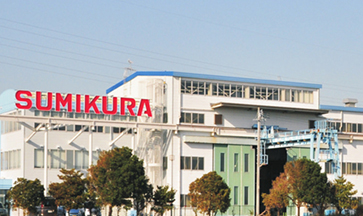
ADRES
487-3, Sanshincho, Chuoku, Hamamatsu, Shizuoka, Japonya
 Japonya yerel pazarı:+81 53-425-5331
Çin'de Fabrika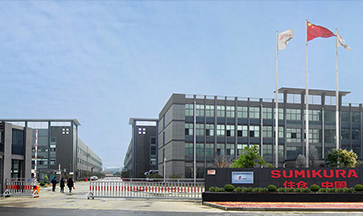
ADRES
265 Yixian Road, Deqing, Zhejiang, Çin
Yurtdışı pazarı:+86 572-883-2016



