
Choosing the right Press blanking lines is not simply a matter of selecting the highest press capacity or fastest production speed. For automotive manufacturers, Tier-1 suppliers, and metal service centers, the better approach is to evaluate the complete production system—from incoming coil characteristics and leveling to blanking accuracy, transfer, stacking, automation, and future production requirements.
A well-matched blanking line should process the required materials consistently, maintain blank dimensions and surface quality, and deliver the required output without creating unnecessary operating costs. SUMIKURA’s automotive inner and outer board press blanking lines are designed around these requirements, with configurations for cold rolled steel (CRS), hot rolled steel (HRS), and aluminum. Depending on the configuration, the lines can reach up to 800 tons of press capacity and 65 strokes per minute (SPM).
The first question when selecting a blanking line should be: What materials and thicknesses will the line process? Material properties directly affect press force, blanking-die design, leveling requirements, feeding stability, and stacking technology.
CRS is commonly used where surface quality and formability are important, while HRS is often selected for structural applications. Aluminum introduces different handling requirements because it is non-ferrous and more susceptible to surface marking. A line designed for multiple materials therefore needs more than sufficient press capacity; its feeding, leveling, tooling, transfer, and stacking systems must also be compatible with the material range.
SUMIKURA lists CRS, HRS, and aluminum among the materials supported by its broader blanking-line configuration, with thickness capabilities reaching approximately 0.2–3.0 mm depending on the specific line configuration. Material width can reach 2,080 mm, while blank length can reach 6,000 mm on the listed configurations.
For high-strength automotive materials, engineers should also examine yield strength, tensile strength, coil flatness, thickness tolerance, and surface requirements. These factors can determine whether a conventional leveling arrangement is sufficient or whether a more advanced leveling system is required.
Press capacity is another major selection criterion, but more tonnage does not automatically mean better production. The required force depends on material thickness, shear strength, blank geometry, cutting perimeter, die clearance, and the way the blanking operation is designed.
When comparing press blanking lines, ask how the rated tonnage relates to the actual products you intend to manufacture. A line should have enough capacity to handle the maximum production condition without being unnecessarily oversized for the majority of jobs.
Production speed also needs to be considered together with material handling. A press rated at a high SPM can only deliver practical productivity if coil feeding, positioning, blank transfer, and stacking can keep pace. SUMIKURA’s listed blanking-line configurations are capable of up to 65 SPM, with press capacities up to 800 tons and large-format press dimensions up to 5,200 × 2,750 mm on the applicable configuration.
For purchasing teams, the more useful question is therefore not simply “How fast is the press?” but “What sustained throughput can the complete line achieve for my actual blank sizes and materials?”
For automotive production, dimensional accuracy is only part of the quality equation. The finished blank must also have controlled edges, stable geometry, and a surface condition suitable for subsequent stamping.
Blanking quality is affected by die clearance, material properties, press rigidity, feeding accuracy, leveling quality, and tool condition. Excessive clearance can increase burr formation and reduce edge quality, while unsuitable clearance can increase cutting force and accelerate die wear. Feeding errors can also accumulate into dimensional deviations even when the press itself operates correctly.
Flatness is equally important. A coil may contain residual stresses or coil-set effects before entering the press. The leveling stage must therefore establish a sufficiently stable strip condition before the material reaches the blanking area. SUMIKURA describes its process as feeding the coil through a precision leveling unit before accurate positioning and blanking, helping prepare flat blanks for downstream stamping.
For Class A automotive panels such as doors, hoods, roofs, and fenders, surface protection becomes especially important. Controlled transfer and non-contact handling can reduce scratches and edge damage during the movement and stacking of blanks.
A blanking line is a complete material-flow system rather than only a press. After the coil is loaded, the material must be fed, leveled, positioned, blanked, transferred, and stacked in a synchronized sequence.
This makes the feeding system an important part of line selection. Stable feeding helps maintain blank length and positioning accuracy, while automated length setting and synchronized press operation can reduce manual adjustments.
The stacking system deserves particular attention when processing different metals. Magnetic stacking is well suited to ferromagnetic steel, while vacuum handling provides an alternative for aluminum and other non-ferrous materials. SUMIKURA offers magnetic and vacuum stacking configurations, allowing the handling method to be matched to material and surface-protection requirements.
For automotive Class A surfaces, stacking is not simply a logistics function. The way a blank is lifted, transferred, aligned, and placed can directly affect cosmetic quality. SUMIKURA also documents hybrid magnetic-and-vacuum stacking for an 800-ton press blanking line, demonstrating how different handling technologies can be combined within one production system.
When comparing Press blanking lines, automation should be evaluated in terms of the entire production cycle rather than individual automated functions.
Automatic coil feeding, sheet-length setting, press synchronization, blank transfer, and stacking can reduce operator intervention and shorten repetitive handling operations. More importantly, synchronized automation can reduce variation between production cycles and help maintain stable throughput.
For high-volume automotive production, the real efficiency indicators include cycle time, changeover time, unplanned downtime, operator requirements, scrap rate, and overall equipment utilization. A line that runs quickly but requires frequent manual intervention may deliver less practical output than a slightly slower line with better process stability.
SUMIKURA’s solution portfolio also includes components such as a Six-Hi Leveler, cassette exchange system, press, magnetic stacker, vacuum stacker, belt bridle, edge cropper, and scrap handling equipment. These components can be considered as part of an integrated coil-processing system rather than isolated machines.
The intended application should define the line specification. Automotive outer panels place strong emphasis on surface quality and dimensional consistency, while inner structural panels may place greater emphasis on material strength, productivity, and throughput.
SUMIKURA identifies automotive OEMs, Tier-1 and Tier-2 suppliers, and metal service centers as key users of its automotive blanking systems. Typical applications include doors, hoods, roofs, fenders, floors, and reinforcement components.
However, purchasing decisions should not be based only on today's production schedule. If a manufacturer expects to introduce aluminum panels, higher-strength steel, larger blanks, or additional vehicle programs, the line should have sufficient flexibility to accommodate these changes.
A useful purchasing question is: “What materials, dimensions, and production volumes might this line need to handle three to five years from now?” Designing for realistic future requirements can prevent an expensive line replacement or major retrofit later.
The best way to compare blanking lines is to create a specification matrix covering material type, thickness, coil width, blank dimensions, required press force, production speed, flatness, dimensional accuracy, stacking method, automation level, and expected annual production volume.
For example, a manufacturer producing large automotive body panels may prioritize a high-capacity press, wide material capability, precise leveling, high-speed operation, and surface-protective stacking. A service center serving multiple customers may place greater emphasis on material flexibility, quick changeovers, and adaptable handling systems.
SUMIKURA’s listed blanking-line capabilities provide a useful reference point for this evaluation: configurations include up to 800 tons of press capacity, material widths up to 2,080 mm, blank lengths up to 6,000 mm, thickness ranges extending to 3.0 mm, and speeds up to 65 SPM.
The final decision should also consider maintenance access, spare parts, control-system support, operator training, safety functions, and long-term service. These factors can have a significant effect on the total cost of ownership over the operating life of a production line.

Kesim hattı uzmanlarınız!
 Japonya'da Fabrika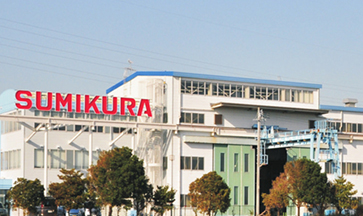
ADRES
487-3, Sanshincho, Chuoku, Hamamatsu, Shizuoka, Japonya
 Japonya yerel pazarı:+81 53-425-5331
Çin'de Fabrika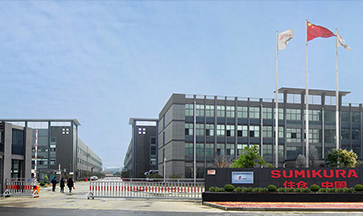
ADRES
265 Yixian Road, Deqing, Zhejiang, Çin
Yurtdışı pazarı:+86 572-883-2016



