
Silicon steel, also known as electrical steel, sits at the center of every transformer core, motor lamination, and generator stack in modern industry. Getting a wide master coil down to the exact narrow strips this equipment needs is not a simple cutting job — it is a precision process where a few microns of edge burr or a fraction of a millimeter of width error can translate into real losses in magnetic performance. This article breaks down how a silicon steel slitting line actually works, what can go wrong along the way, and how manufacturers keep quality consistent at production speed.
Silicon steel is a low-carbon alloy with added silicon content that boosts electrical resistivity and reduces core losses when the material is exposed to a changing magnetic field. It comes in two main families: cold-rolled grain-oriented (CRGO) steel, used mainly in large power and distribution transformers, and cold-rolled non-grain-oriented (CRNGO) steel, favored in motors and smaller transformer cores where the magnetic flux direction is less predictable.
Mills produce silicon steel in wide master coils, often well over a meter across, because that is the most efficient rolling width. But transformer laminations and motor cores are built from narrow strips, sometimes as slim as a few millimeters, wound or stacked layer by layer. Slitting is the step that converts one wide coil into many precisely sized narrow strips without damaging the delicate insulation coating or distorting the grain structure that gives the steel its magnetic properties.
A slitting line is really a sequence of coordinated stations, each one protecting the strip from a different kind of damage while moving it toward the recoiler at speed.
The process starts at the uncoiler, which holds the master coil on an expandable mandrel and pays it out under controlled brake tension. For silicon steel, tension at this stage has to be gentle but stable — too little and the coil can telescope sideways, too much and the thin, brittle strip can stretch or crease near the coil eye.
Before the strip reaches the blades, it passes through a leveler that removes coil-set curvature and any residual flatness defects from upstream rolling. A well-tuned 6-Hi leveler is particularly useful here, since its multi-roll cassette design applies even pressure across the strip width and corrects distortion without over-working the grain-oriented microstructure that CRGO steel depends on. Feed rolls then pull the strip forward at a controlled, synchronized rate into the slitting head.
This is the core operation: pairs of circular upper and lower knives, mounted on arbors and set to a precise horizontal overlap and vertical clearance, shear the strip into individual ribbons as it passes through. The knives don't cut so much as they fracture the material cleanly between two blade edges, which is why knife sharpness, spacing, and alignment matter so much for silicon steel — its thin gauge and coating are unforgiving of sloppy tooling.
As the strip separates into multiple narrow ribbons, each one needs to be held under matched, independent tension so they travel at the same speed without drifting, wandering, or rubbing against neighboring strips. Systems built around a felt pad, rollers, or a belt bridle tension system are all common answers to this problem, and the right choice depends on strip thickness, coating type, and whether the surface is oil-coated.
Finally, each slit strip winds onto its own mandrel, typically through a turnstile or double-recoiler arrangement that lets one set of coils be removed while the next set continues winding, minimizing downtime between coil changes.
A complete line generally combines an uncoiler, a leveler or straightener, a slitting head with interchangeable knife arbors, a tension and separation section (rollers, guide plates, or looping pits), a scrap or edge trim system, and a recoiling station with mandrels and coil cars. On lines built specifically for CRGO and CRNGO material, manufacturers often add narrower width ranges and finer thickness tolerances than a general-purpose metal slitting line, since electrical steel runs thinner and demands tighter control than typical carbon steel or aluminum coil.
Burr is the small ridge of deformed metal left along the cut edge. On silicon steel, excessive burr can pierce the interlaminar insulation coating between stacked laminations, creating unwanted electrical shorts between layers and raising core losses.
Beyond burr, the shearing action can leave a rounded or wavy edge profile if blade clearance is wrong, which affects how tightly laminations stack and how evenly they carry magnetic flux.
The horizontal gap between upper and lower blades needs to scale with strip thickness — generally a small percentage of the material gauge. Too much clearance tears the material instead of shearing it; too little accelerates blade wear and increases cutting force.
Silicon content makes the alloy more abrasive on cutting edges than plain carbon steel, so blades dull faster and need more frequent inspection. Lines that run high mixes of electrical steel benefit from a fast slitter exchange system, allowing worn knife sets to be swapped for sharp ones with minimal production interruption rather than shutting the whole line down for manual tooling changes.
Tension is the thread that holds the entire process together after the knives separate one wide strip into many. If tension is uneven across strips, wider or heavier ribbons can pull ahead of narrower ones, causing telescoping on the recoiler, edge damage from strip-to-strip contact, or wrinkling. Because silicon steel is thin and coated, even light scuffing from tension mismatch can scratch through the insulation layer. Consistent, individually adjustable tension — whether delivered through felt plates, rollers, or a belt bridle arrangement — is what keeps every strip in a multi-strip run tracking straight and winding evenly.
Line speed and material thickness are closely linked. Thinner silicon steel gauges, often between 0.1 and 0.5 millimeters for electrical applications, can usually run faster because there is less mass to accelerate and less cutting force required, but they are also more prone to flutter, chatter, and tension instability at high speed. Thicker or wider coils demand more robust tension units and slower, more controlled speeds to avoid excess vibration at the slitting head. Matching speed to gauge, rather than pushing every coil at maximum throughput, is usually the difference between a clean run and a batch full of rejects.
Usually traced to worn blades, incorrect knife clearance, or misaligned arbors. Regular blade inspection and correct clearance setting for the specific gauge resolve most cases.
Often caused by knife spacer wear or thermal expansion of the arbor during long runs. Precision spacers and periodic width verification during production help maintain tolerance.
Typically the result of uneven or insufficient tension at the recoiler. Properly matched, individually controlled tension zones for each strip largely eliminate this.
Frequently linked to debris on guide rollers or misaligned separator plates rubbing against the coated surface. Keeping guide surfaces clean and correctly aligned protects the coating.
Can appear as strips drifting sideways or wrinkling mid-line. This is often solved by upgrading to a more responsive tension system, such as a belt bridle setup, that reacts quickly to speed or load changes.
Productivity gains on a slitting line usually come from reducing non-cutting downtime rather than just running the knives faster. Quick-change tooling systems shorten the time between different width setups. Automated width measurement and closed-loop tension control cut down on manual adjustment and scrap during startup. Choosing a line configuration — such as a dedicated electrical steel slitting line built around CRGO and CRNGO specifications — that already matches the target material range avoids the inefficiency of forcing a general-purpose line to handle specialty gauges it wasn't optimized for.
Precision-slit silicon steel strips feed directly into transformer core lamination stacking, traction motor cores for electric vehicles, generator windings, and household appliance motors. In every one of these applications, the narrow strip's edge quality and dimensional consistency directly influence core losses, noise, and overall energy efficiency, which is why slitting is treated as a precision manufacturing step rather than a simple cutting operation.
Silicon steel slitting sits at an intersection of mechanical precision and material science: get the tension, knife clearance, and leveling right, and the strip retains the magnetic properties the mill built into it. Get any one of them wrong, and even the best-rolled coil underperforms once it reaches the transformer or motor line.

Kesim hattı uzmanlarınız!
 Japonya'da Fabrika
ADRES
487-3, Sanshincho, Chuoku, Hamamatsu, Shizuoka, Japonya
 Japonya yerel pazarı:+81 53-425-5331
Çin'de Fabrika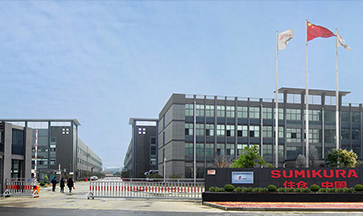
ADRES
265 Yixian Road, Deqing, Zhejiang, Çin
Yurtdışı pazarı:+86 572-883-2016



